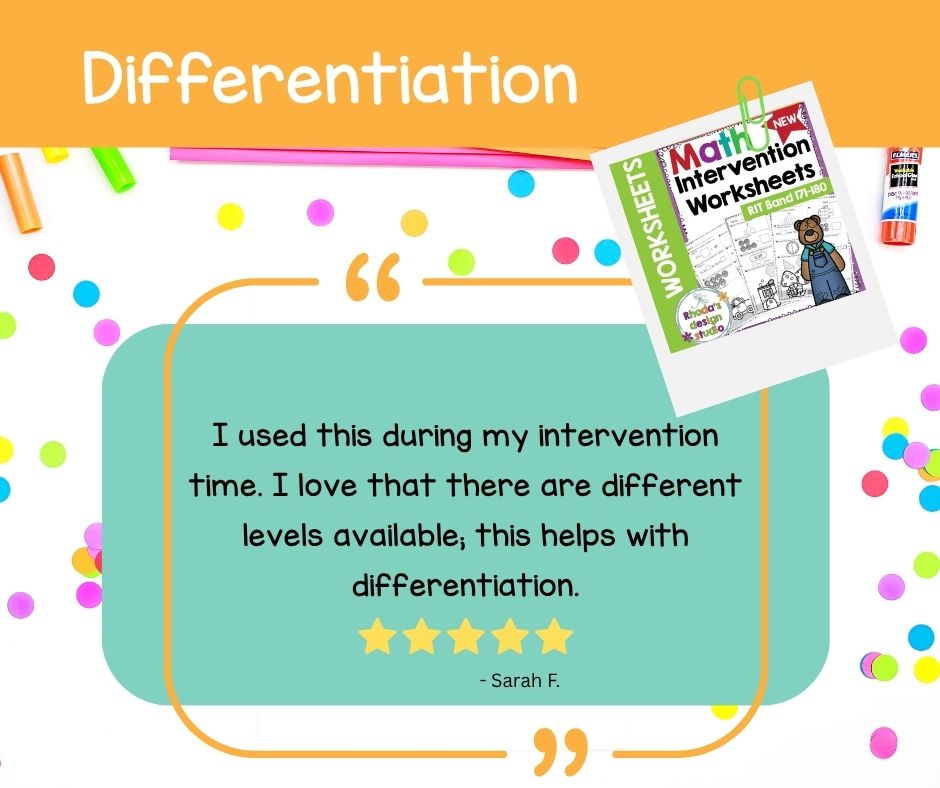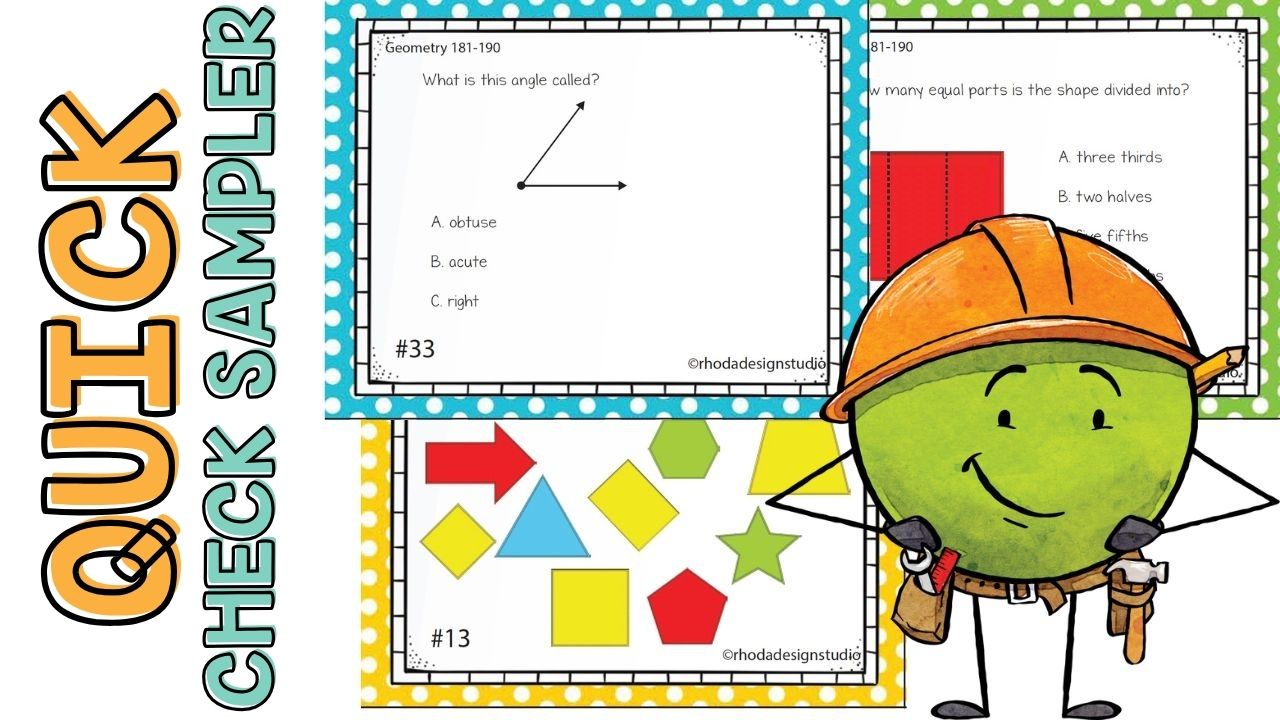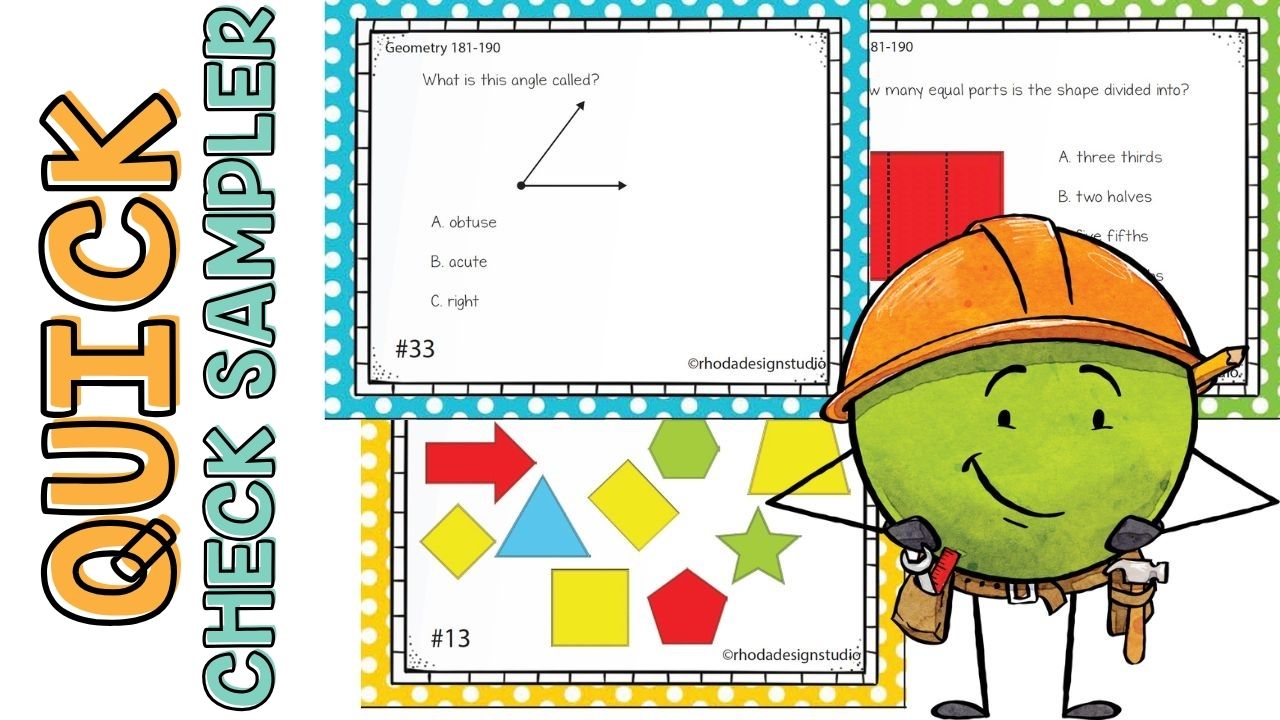
Turn your students' RIT scores into ready-to-run Math and ELA intervention plans without spending your nights piecing together resources for five different groups.
Finally feel like you’re actually using your MAP data, not just collecting it.
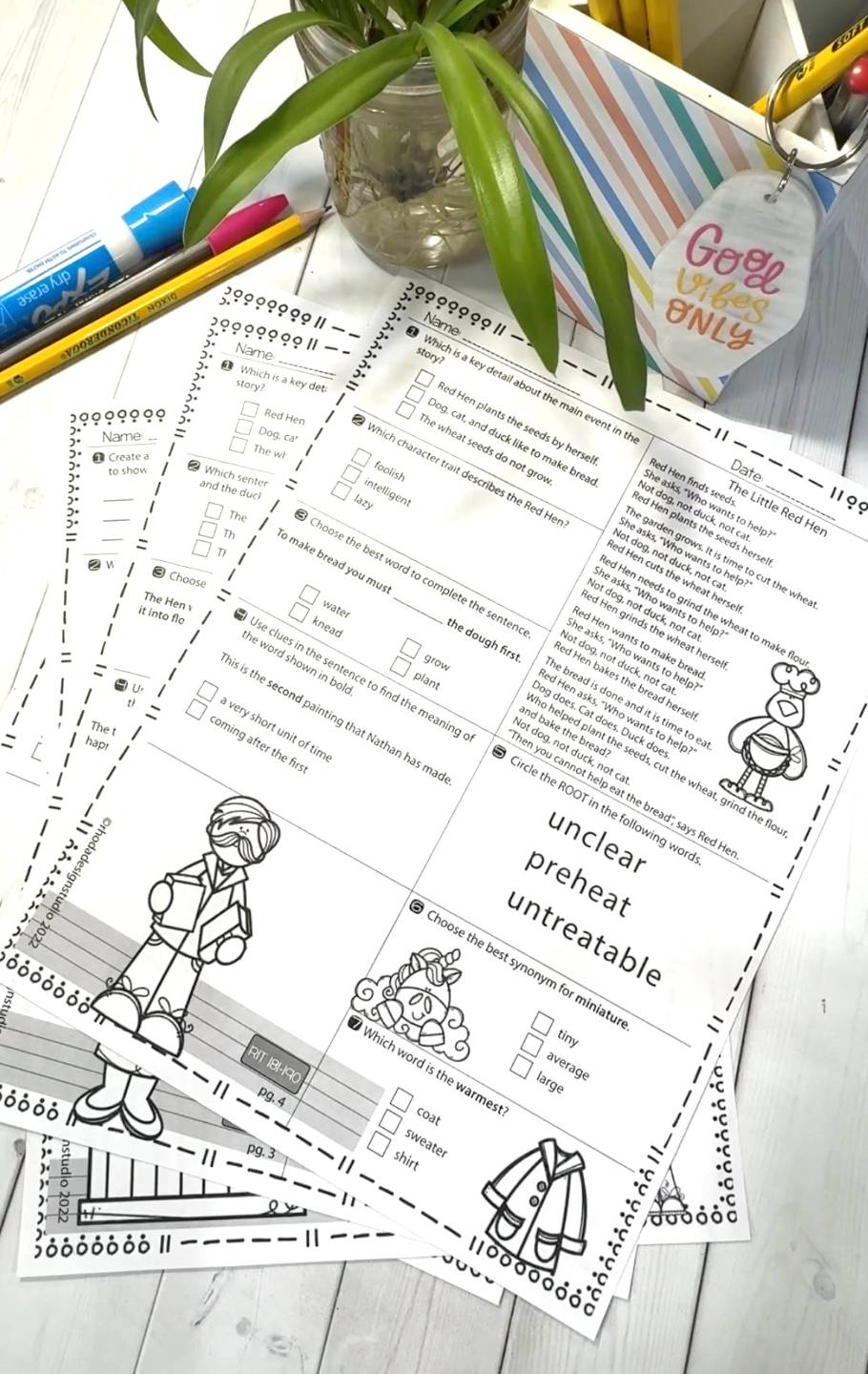
Give every student practice at the level they actually need, so you can close skill gaps, build confidence, and finally see the growth you’ve been working for.
I'm ReadyYou got the scores. Now what?
You’ve got a room full of kids at five different RIT levels.
Your 141–150 group is working on basic addition and subtraction facts.
Your 161–170 group needs practice with missing numbers, fact families, and multiplication through repeated addition.
Your 181–190 group is ready for multiplication, division, and multi-step word problems.
And while you’re figuring all of THAT out for Math, your ELA groups need everything from beginning sounds and sight words to syllables, phonics, vocabulary, and reading comprehension.
So now you’re supposed to look at every RIT score, figure out what skills go with it, find practice that actually matches those skills, make copies for five different groups, and somehow squeeze it all into your intervention block.
By Monday.
And then the scores change.
You shouldn’t have to rebuild intervention every time they do.
You don’t need another MAP report telling you your students are behind.
You already know.
You open the scores and see:
167 → 168.
One point of growth after months of small groups, interventions, extra practice, and trying to fill the gaps.
Or worse:
174 → 171.
And immediately you’re thinking:
What am I missing?
Because another testing window is coming. Another data meeting. And you’re expected to show growth.
MAP gives you incredibly specific data (163, 178, 192) but you’re still left figuring out what each student needs, which skills to target first, and what to actually put in front of them tomorrow.
The score isn’t the problem. Not knowing exactly what to do next is.
That’s the gap the RIT Band System was built to fill.

Imagine walking into intervention already knowing what to do.
You pull your 161–170 group, grab the practice for their RIT band, and start teaching.
No searching. No guessing if it’s too easy or too hard. No spending Sunday night trying to create five different versions of the same lesson.
It’s already figured out for you.
So those precious 20 minutes can actually be spent teaching the skills, catching misconceptions, asking questions, and helping kids make progress, instead of managing a pile of mismatched resources.
And when groups change after the next MAP test?
You don’t start over.
New score. New RIT band. Right practice. Keep moving.
You get more time to teach.
Your students get practice targeted to where they are.
And you finally get to watch those gaps get smaller and those scores start moving in the right direction.
Meet the RIT Intervention System
The intervention system built around your students' ACTUAL MAP scores.
This isn't another giant folder of worksheets you're going to download, forget about, and then spend Sunday night digging through when you need something.
It's a complete system for planning and running targeted Math and ELA intervention.
You get the RIT band.
You get the plan.
You get the resources.
You run the group.
That's it.
You'll have a clear plan for each RIT band from 121–230, with resources organized around the skills your students need.
So instead of spending your prep period asking:
"What am I supposed to do with this group?"
you can open the system and get to work.
And teachers are already using these resources.
More than 29,000 teachers have these materials in their files.
And this isn't a collection of random resources.
It's the only complete RIT 121–230 system covering both Math and ELA, with resources across every band, in multiple formats.
Built by a teacher. For the way intervention actually works.
The RIT Intervention System was built by a teacher with 13 years in the classroom.
So it wasn't designed around some imaginary school day where you've got unlimited prep time and one perfectly leveled group sitting in front of you.
It's built for the actual mess.
It's for teachers who are:
- Managing 3–5 different RIT levels at once
- Running Math or ELA intervention groups
- Working in MTSS or RTI
- Supporting mixed-level special education groups
- Coaching teachers who need intervention resources
- Homeschooling with NWEA MAP data
If you've got MAP scores and students who need targeted practice, this was made for you.
You don't need another resource to search through. You need the RIGHT resource when you need it.
Here's what your week looks like inside the system.
When you join, you don't get dumped into a giant resource library and told to figure it out.
You get a Start Here guide that tells you what to do first.
STEP 1: Enter your scores
Put your students' RIT scores into the Class Snapshot Tool.
It sorts your students into intervention groups automatically.
No spreadsheet skills required.
Now you know who's working together.
STEP 2: Grab your plan
You'll have an Intervention Pack for every RIT band from 121–230.
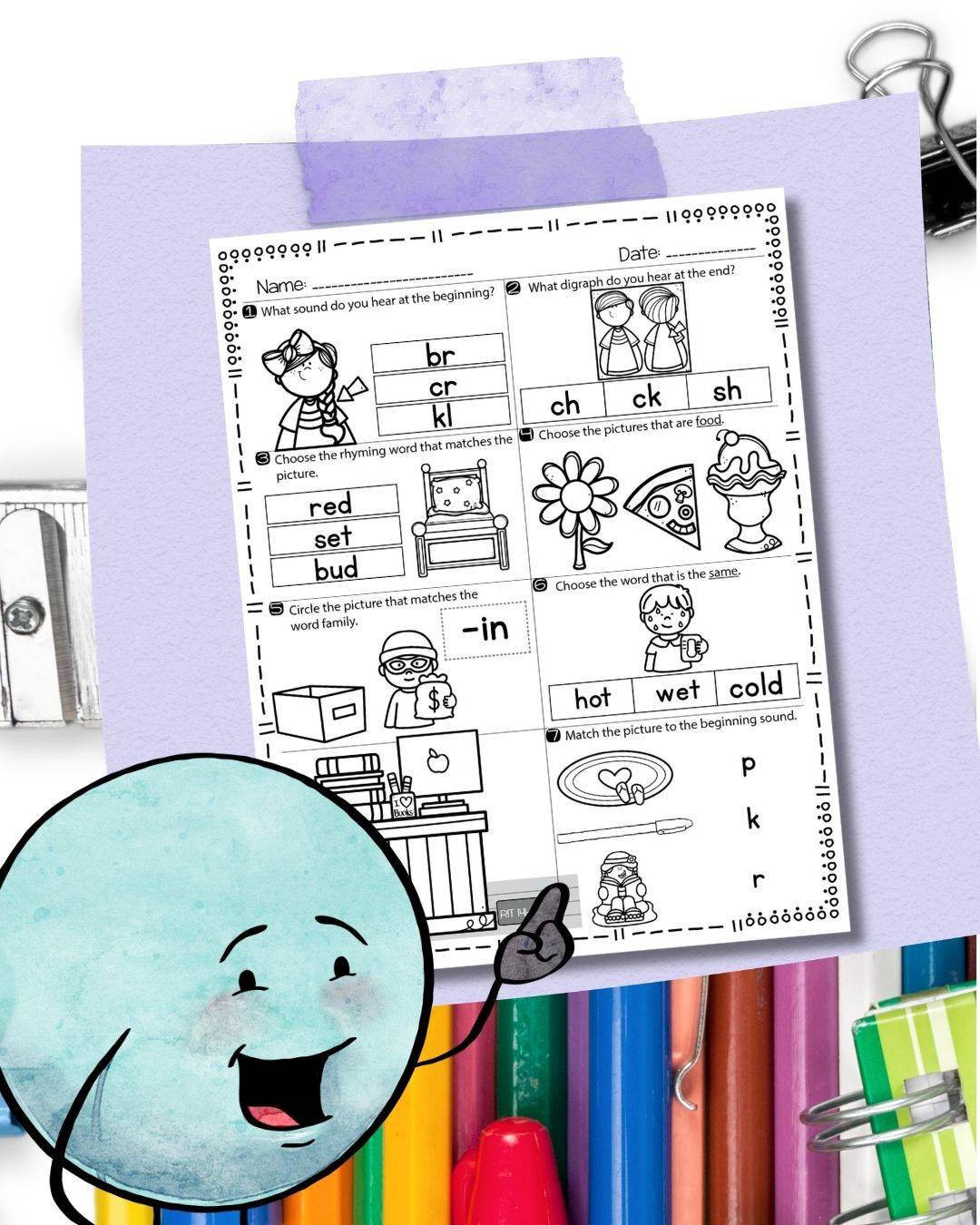
8 weeks of daily worksheets.
Practice materials.
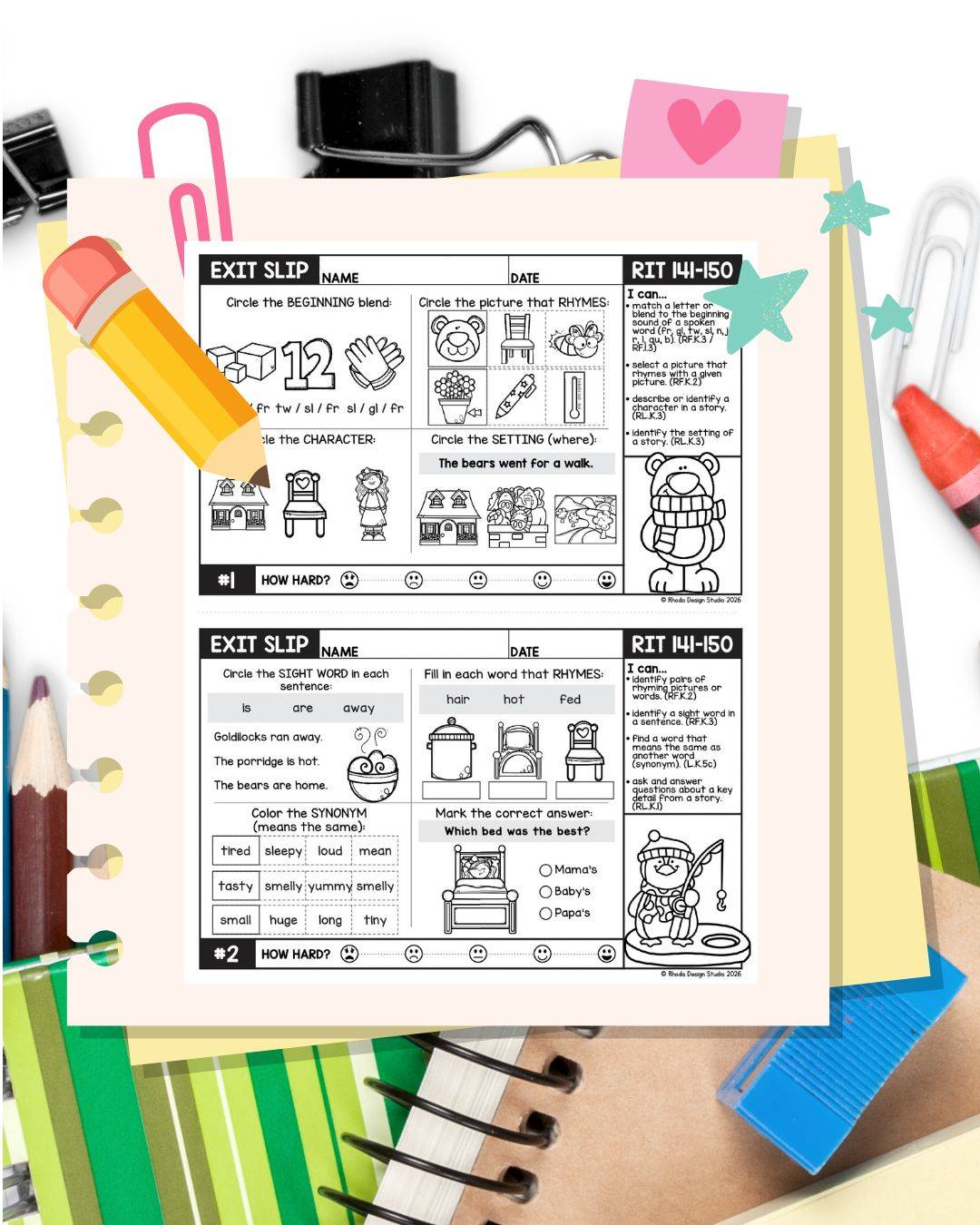
Quick checks with Exit Slips.
Progress monitoring.
It's all there.
So you're not spending your prep period searching for five different resources that might work.
STEP 3: Run your groups
Open the file.
Print it.
Pull the group.
Teach it.
Your 20-minute small group is planned and ready to go.
You know what you're teaching and why you're teaching it.
You're not winging it.
STEP 4: Track the growth
Use the pre, mid, and post checks to see how your students are progressing through the intervention cycle.
When spring testing comes around, you have documentation of the work you've done.
And your students have data that shows where they've grown.
That's the whole point.
Take the scores you already have.
Use them to build the right groups.
Teach the right skills.
Track the work.
Then do it again with the next round of data.
Stop spending Sunday night building Monday's intervention groups on Pinterest.
I WANT THE FULL SYSTEM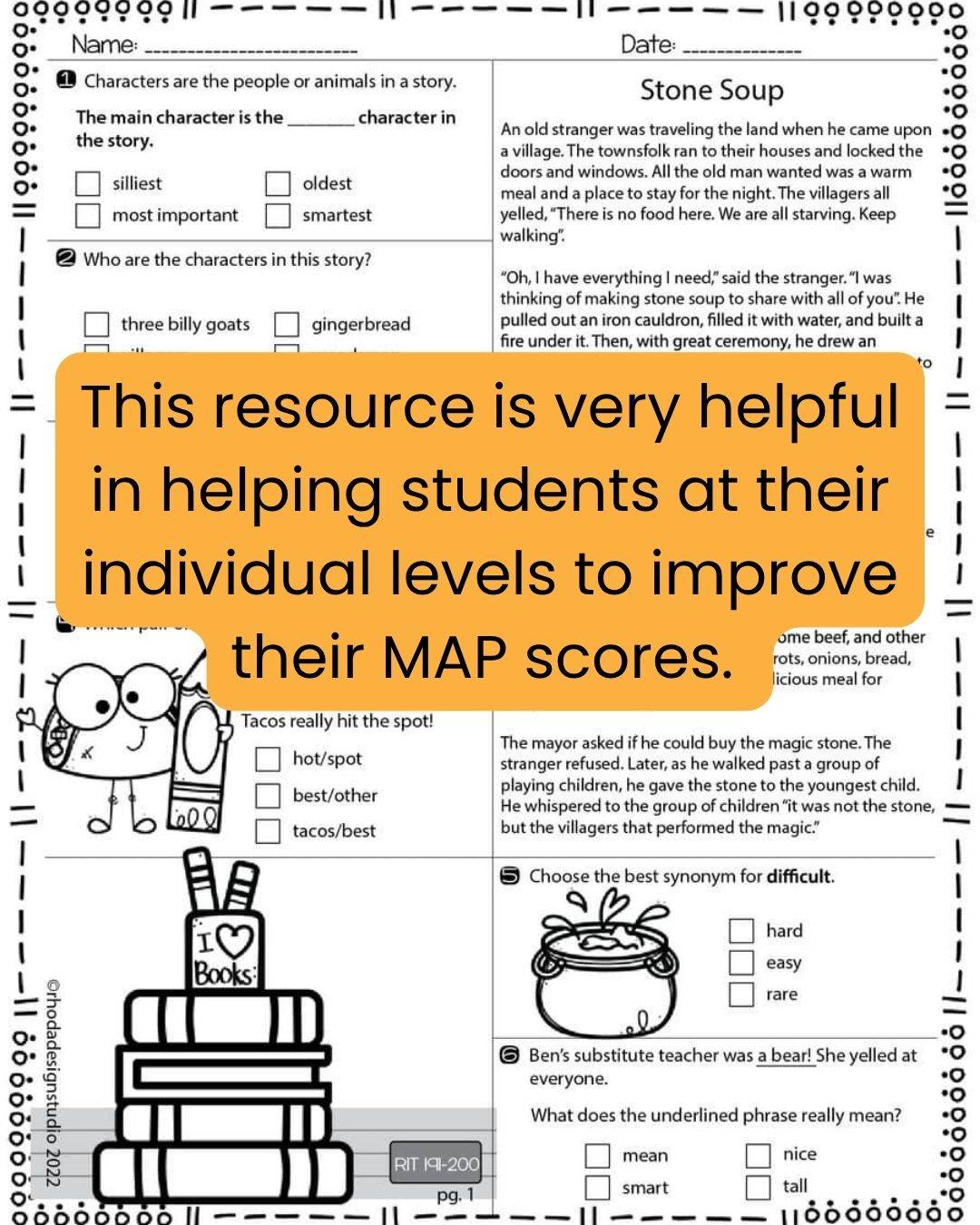
Teachers are already using it.
You don't have to take my word for it.
"I need a way to review and work with my students in small groups without spending all my time putting things together and finding resources. Then I found this... totally worth it."
Verified TPT Buyer
That's exactly what this system is built to solve.
"I have been using these for interventions during math MTSS. They have been working great, and target the specific levels different students are on."
Verified TPT Buyer
Targeted resources.
Actual intervention groups.
Built around the data you're already using.
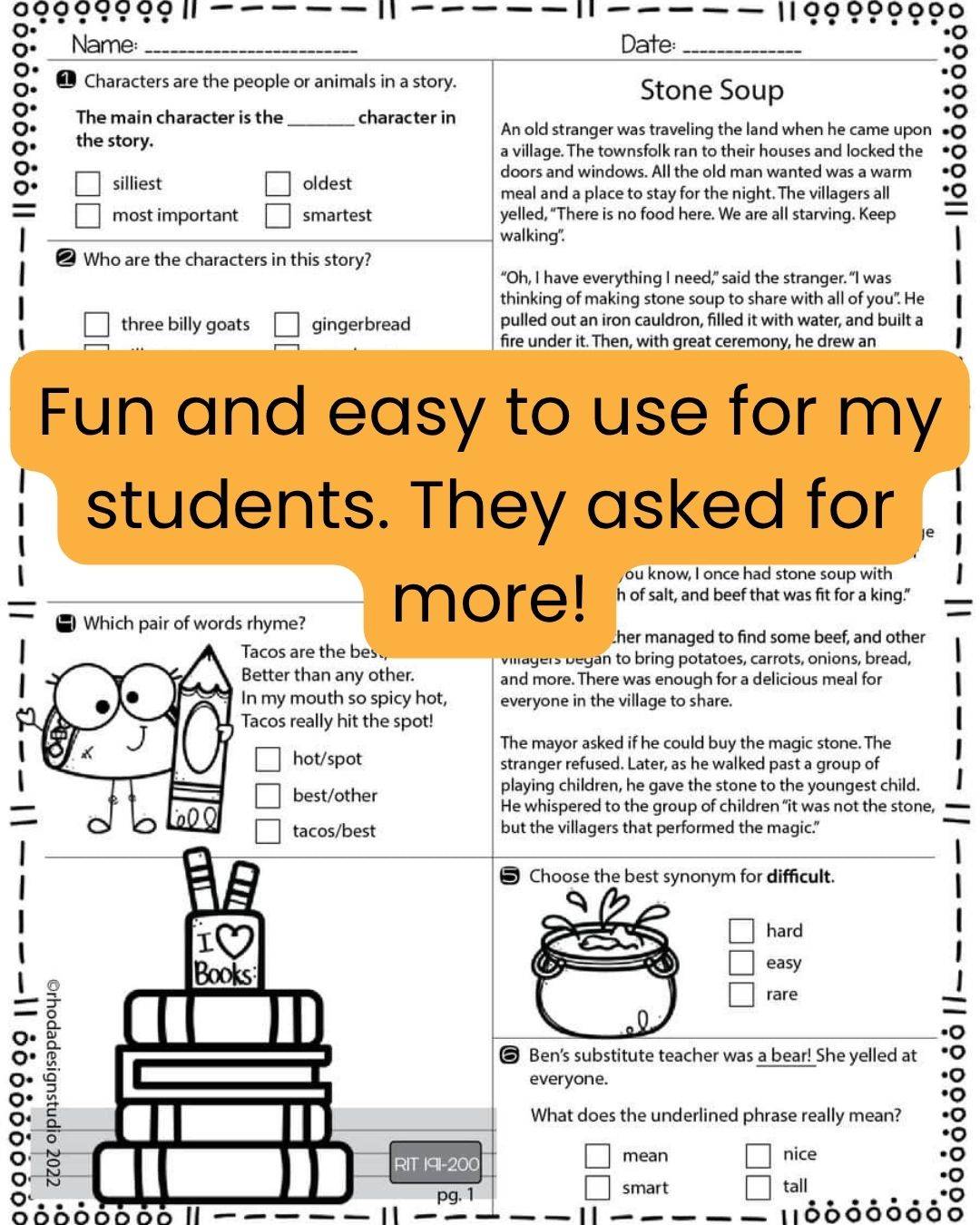
"All of your task cards for the NWEA MAP RIT bands have been a lifesaver! My students are engaged and have shown good growth having used them."
Verified TPT Buyer
And this one matters too:
"I bought all of the different RIT bands."
Verified TPT Buyer
Because when you have multiple groups, buying one random resource doesn't solve the problem.
You need the system across the bands.
That's what you've got here.
Everything you need to run targeted intervention without building it all yourself.
Math: RIT Bands 121 to 230
You'll get:
- Small group lesson plans targeting the skills that show up most in each RIT band
- Skill-based worksheets with spiral review so students don't forget what they learned
- Task cards for small groups, centers, intervention, and early finishers
- Google Slides for digital practice or whole-class projection
- Exit Slips with standards based practice
ELA: RIT Bands 121 to 230
You'll Get:
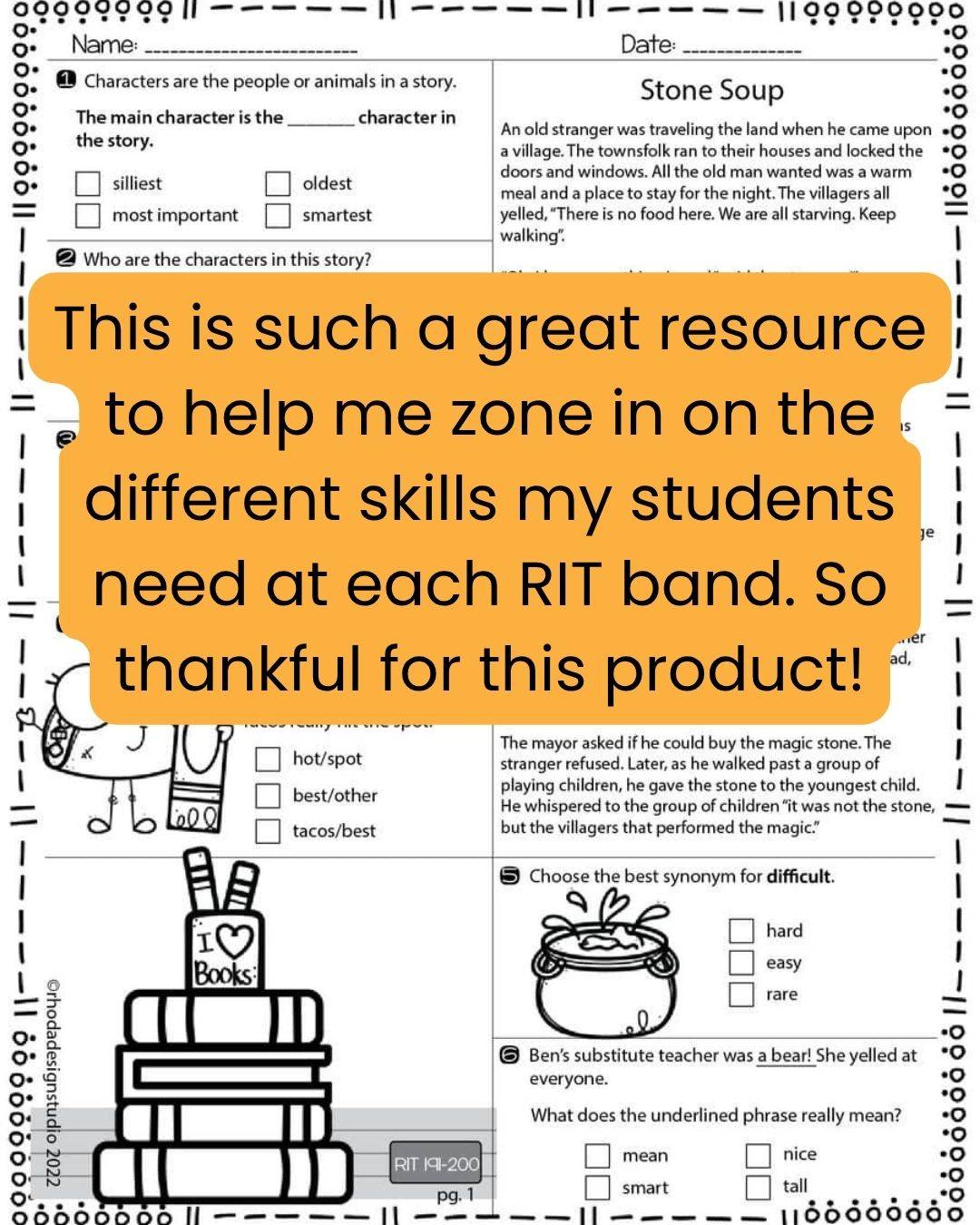
- Reading, vocabulary, language, and foundational skills practice sorted by RIT band
- Leveled passages so you're never guessing whether something is the right fit
- Task cards and Google Slides for flexible use
- Spiral review that hits the big skills again and again in different ways
- Exit Slips with standards based practice.
Plus the system tools:
✅ Class Snapshot Tool
Enter your students' scores and sort them into intervention groups in minutes.
✅ Testing Season Roadmaps
A plan for Fall, Winter, and Spring testing windows.
✅ Small Group Scheduling Templates
30-minute and 45-minute versions so you can actually fit intervention into your school day.
✅ Monthly Implementation Plan
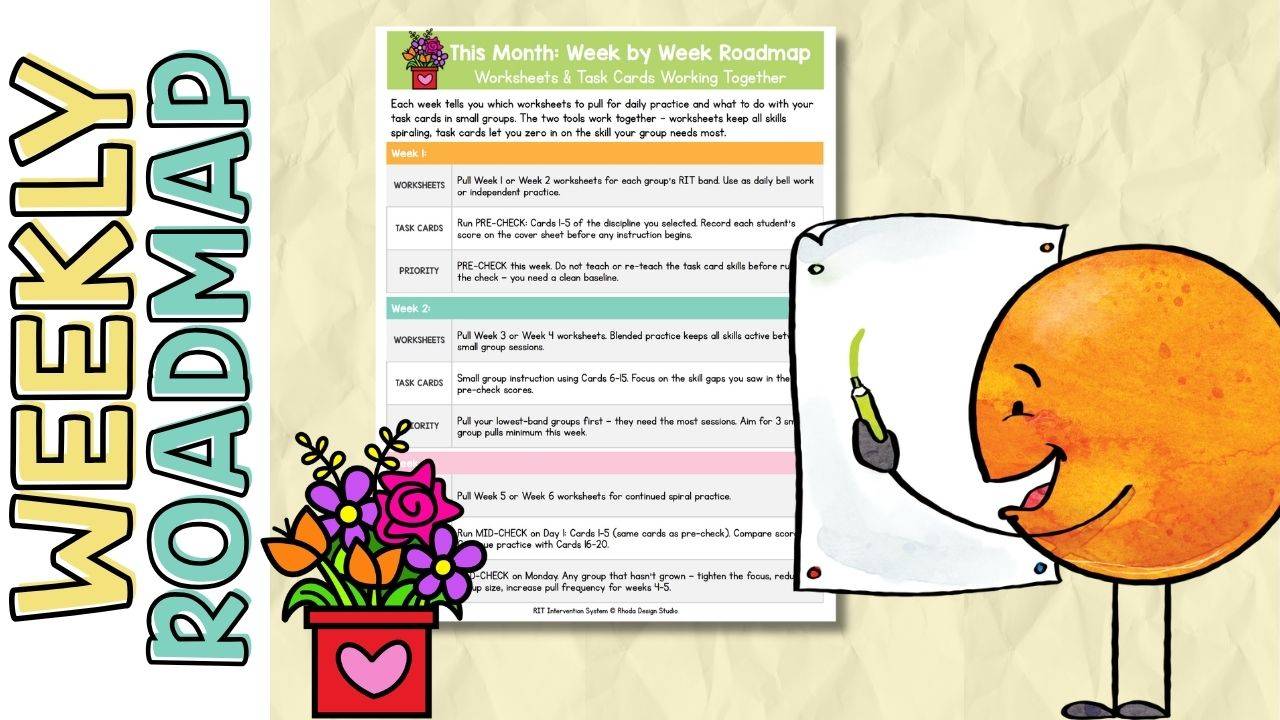
A one-page plan telling you what to focus on, which RIT band to pull from, and what to do Monday through Friday.
✅ Progress Monitoring Tools
Pre, mid, and post checks you can use throughout your intervention cycle and keep in your MTSS documentation.
You're getting the resources AND the system for using them.
That's the part that saves you time.
You didn't become a teacher to spend Sunday nights hunting for worksheets.
You became a teacher to teach kids.
But when your students are sitting at five different RIT levels, somebody still has to figure out what each group needs.
And usually, that somebody is you.
The student who's behind needs practice that's actually at their level.
The student who's ahead shouldn't spend another month practicing something they've already mastered.
And you shouldn't have to spend your entire Sunday building five different intervention plans to make that happen.
You already have the data.
You already know these students need targeted support.
The missing piece is having a system that helps you turn those scores into something you can actually USE.
That's what the RIT Intervention System does.
Get the scores. Build the groups. Grab the plan. Teach.
Then go home.
Choose Your Membershp:
If you're using MAP throughout the school year, the annual membership is the best value.
If you want to try it first, start monthly.
Either way, you get the full system.